
From the kitchen tap to your garden hose, every litre counts. South Africans are finding new, creative ways to stretch their water supply – not just during droughts, but all year round. Whether you’re a first-time homeowner or an avid gardener, these practical tips will help you save water, lower your bills, and build a greener home with JoJo.
Top Indoor Water-Saving Tips
Fix Leaks & Upgrade Fixtures
A dripping tap might look harmless, but it can waste up to 21 litres a day – that’s over 7,600 litres a year. Yikes! So check bathrooms, kitchens, outdoor taps, and toilet cisterns regularly.
Simple home upgrades can also go a long way:
- Fit aerators to taps
- Install low-flow showerheads
- Switch to dual-flush toilets
What are the easiest ways to save water at home in South Africa?
Fix leaks, shorten showers, run appliances only when full, and choose low-flow taps and showerheads. These alone can save hundreds of litres a week.
Smarter Laundry & Bathroom Habits
- Run washing machines and dishwashers only when full
- Choose eco-cycles, which reduce water use
- Cut showers from 10 minutes to 5 (you’ll save ~70 litres per shower)
Reuse Greywater Safely
Greywater (the relatively clean water that comes from baths, basins, and laundry) can be a valuable source for garden irrigation, but it must be used correctly to protect both plants and soil health.
Here’s how to do it safely:
- Use eco-friendly detergents only. Traditional soaps and washing powders can contain salts or chemicals that harm plants over time.
- Apply greywater directly to the soil, not the leaves. This avoids leaf burn and helps water reach the root zone where it’s needed most.
- Use greywater immediately, never store it. Stored greywater turns anaerobic within hours, leading to bacterial growth and unpleasant odours. Using it right away keeps your garden (and your nose!) happy.
How can I reuse water safely in my garden?
Only reuse greywater from baths/showers/laundry, avoid bleach or harsh chemicals, and apply it directly to soil using a watering can or dripline, never store it (unless you have a proper greywater system).
Garden Water-Saving Strategies
Choose Indigenous, Drought-Resistant Plants
Water-wise gardening is one of the most effective garden water conservation methods. Indigenous plants thrive naturally in local climates and require far less irrigation.
Excellent options include:
- Aloes
- Agapanthus
- Spekboom
- Indigenous grasses
- Wild sage (Salvia africana-lutea)
What are the best drought-resistant plants for South African gardens?
Aloes, spekboom, agapanthus, lavender, wild rosemary, and drought-tolerant succulents. Visiting your nearest indigenous nursery is a great place to find inspiration and advice.
Water at the Right Time
Like so many things in life, timing matters!
- Water early morning or late evening to reduce evaporation
- Use mulch around plants to keep soil cool and moist
- Group plants with similar watering needs
Install Drip Irrigation or Soaker Hoses
Sprinklers can lose up to 50% of their water to evaporation, especially on hot days. Drip irrigation delivers water directly to the root zone, right where plants need it.
Rainwater Harvesting – A Smart Investment
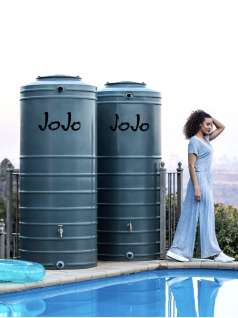
Rainwater harvesting systems in SA offer one of the most reliable long-term strategies for saving water and reducing reliance on municipal supply. A correctly installed tank can gather thousands of litres per rainy season – enough to offset irrigation, garden care, toilet flushing, and even household top-ups.
Learn more about JoJo’s…
Rainwater harvesting solutions
Vertical water storage tanks for rainwater harvesting
Why JoJo?
Homeowners trust JoJo tanks for water storage because they’re UV-resistant, built to last, and made for South African conditions. But it’s more than just the tank—JoJo also offers a full range of accessories, filters, and pumps to help you turn your setup into a complete backup water storage solution.
Do rainwater tanks really save money?
Yes! Collecting free rainwater reduces your municipal usage, protects you during shortages, and lowers irrigation costs, especially when paired with JoJo accessories.
And with our Whole-house Disruptor filter, rainwater can even be treated for domestic use throughout the home—including drinking and cooking.
Small Lifestyle Changes That Add Up
These water restrictions in South Africa tips are easy to put into practice:
- Turn off the tap while brushing teeth
- Sweep driveways instead of hosing them down
- Use a bucket rather than a hose for car washing
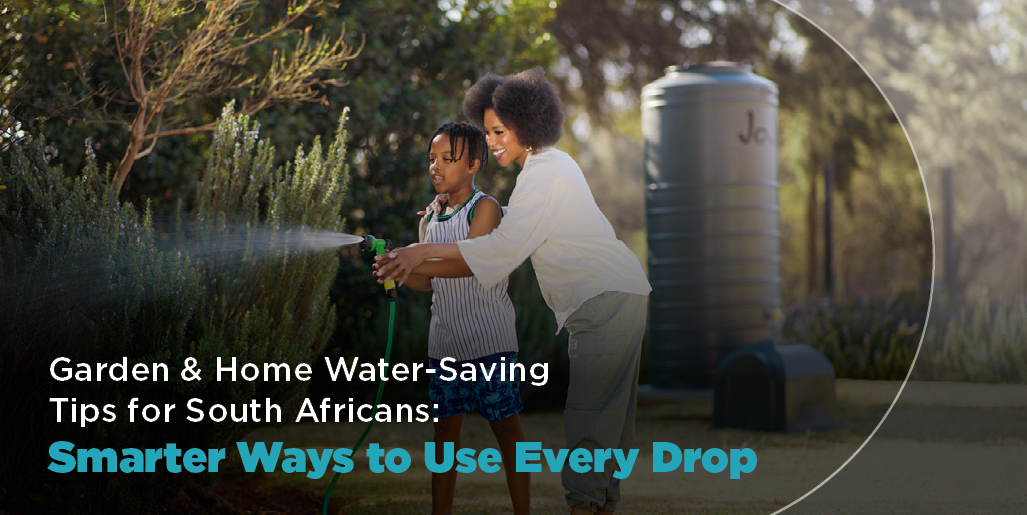
- Teach children water-saving habits early
- Keep a jug of cold water in the fridge instead of running the tap
Every small action reduces unnecessary water waste – and your monthly bill!
Rainwater Tank Maintenance Tips
To get the most from your rainwater, remember to…
- Clean gutters twice a year
- Check strainers for debris
- Flush first-flush diverters before the rainy season starts
- Wash tank interiors annually or as needed
For full guidance, check out: How to properly treat and maintain your JoJo rainwater tank.
How often should I test rainwater for safety?
Ideally once or twice a year, especially if using rainwater for domestic indoor use or if the water becomes cloudy, smelly, or discoloured.
Start Your Water-Saving Journey Today
South Africans face real water challenges, but with the right habits and systems, every household can make a big difference. From simple daily changes to installing a rainwater tank, each step helps you build a more resilient, water-wise home.
Explore JoJo’s full range of rainwater harvesting accessories to get started!