Septic Tanks

Provide an independent, off-grid wastewater management solution when access to existing infrastructure is limited or not feasible.

Septic Tank Overview

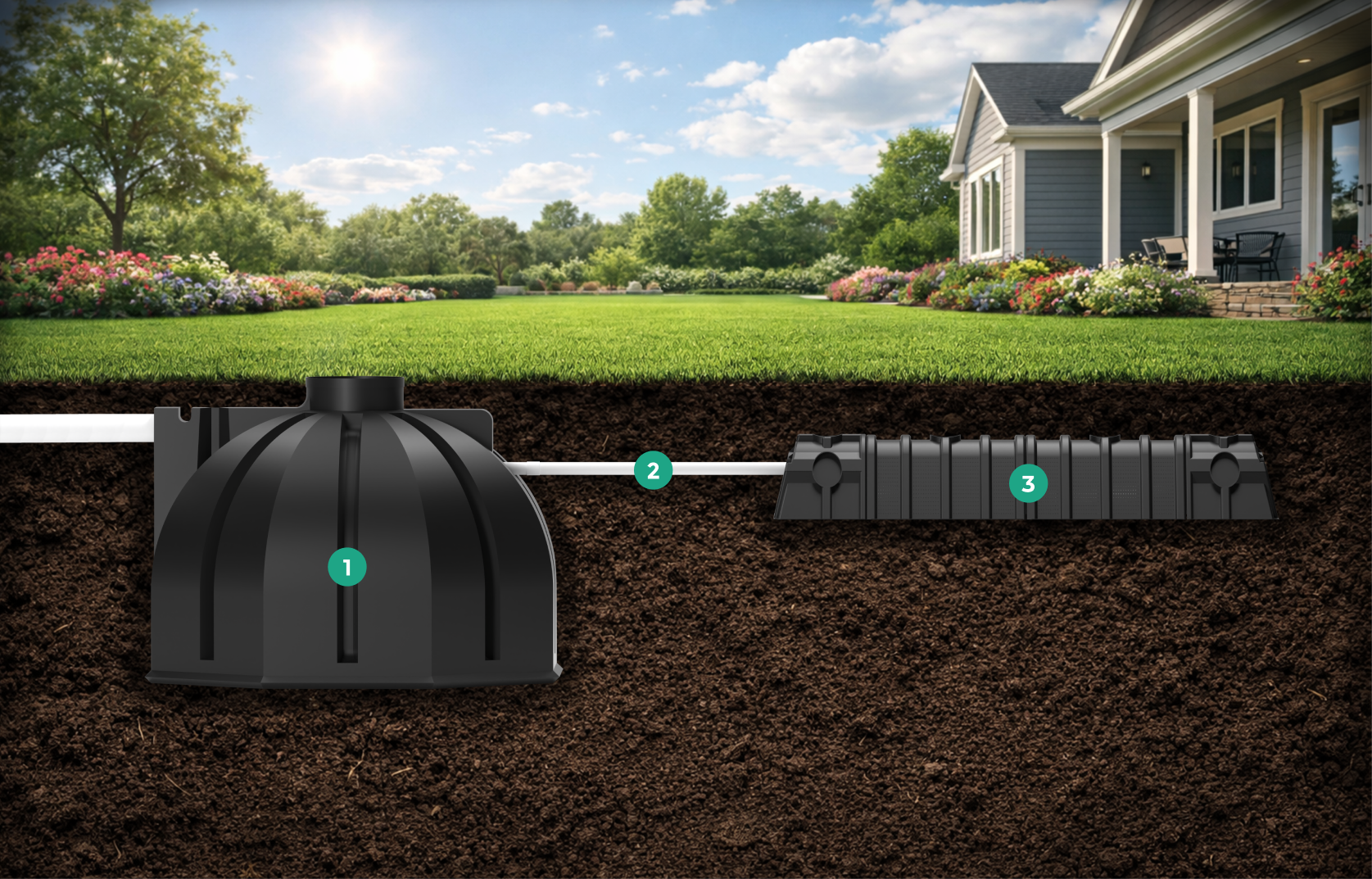
A septic tank system is installed underground to collect sewage and allow natural bacterial processes to break it down. It requires piping to transport wastewater to the tank, along with a soakaway or drainage system to safely disperse the treated effluent into the ground.

An off-grid solution for simple, reliable wastewater management.

Benefits

Pro Tips

System Components

Septic Tank Render
number icon 1

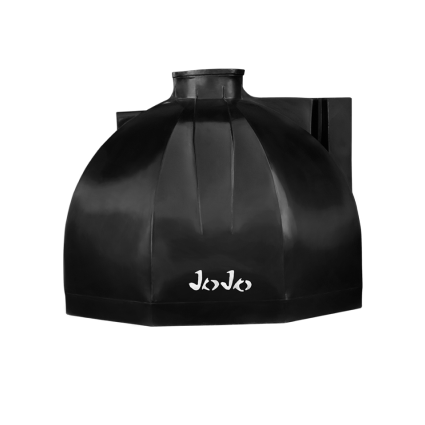
Septic tank

It’s essential to choose the correct septic tank size to ensure a minimum retention time of 24 hours for effective treatment. Whether for residential septic tanks or larger-scale installations, the size guide below helps determine the recommended capacity based on the number of people using the facilities daily.

Recommended Tank Capacity​

PeopleTank Size
2 - 41 250 Litre
2 - 61 500 Litre
4 - 61 750 Litre
4 - 72 000 Litre
4 - 92 500 Litre
20 - 256 000 Litre
number icon 2

Pipes & Elbows (standard PVC pipes in 50 or 110 mm)

Standard practice is to use a 50 mm PVC pipe to connect the septic tank outlet to the soakaway. However, some wastewater practitioners prefer using a 110 mm PVC pipe for this connection. JoJo plastic septic tanks are designed to accommodate both options.

Pipe lengths will vary depending on the installation, including:

Elbows:
Select the required quantity and choose the size to match the pipes being used. 


number icon 3

Soakaway

A soakaway (also called a French drain or leach field) is essential for safely dispersing treated wastewater into the surrounding soil. As the water seeps through the ground, it undergoes further natural purification before reaching groundwater or nearby water bodies.
Types of soakaways

Important considerations

Disclaimer

This guide covers the basics of a septic tank installation. Actual installations may vary based on site conditions and system requirements. We recommend using a qualified professional for an installation of this complexity.

Septic Tank_Banner Icon

Ready to choose the right septic tank for your home or project?

Maintenance

While septic tanks need little maintenance, a few simple routine checks will help extend the system’s life and keep it performing at its best.

Use septic-friendly cleaning products

Only use products labelled as septic-safe. Regular chemicals can damage the tank and kill the bacteria needed to break down solids.
Important: Even one teaspoon of dishwashing liquid can disrupt the system for up to seven days.

Choose septic-safe toilet paper

Use toilet paper that breaks down easily to prevent blockages.

Don’t flush non-biodegradable items

Avoid flushing wipes, sanitary products, nappies, or any other non-biodegradable items, as these can clog the tank and soakaway.

Keep the lid secure

The tank lid is filled with concrete during installation to keep it sealed. Check periodically to ensure it remains firmly in place so nothing can fall in and no effluent can leak out.

Monitor for warning signs

Contact a qualified septic professional immediately if you notice any of the following:

newsletter_image

Tap into JoJo’s Latest Products and Splashy Promotions

First Name(Required)

By completing this form your are signing up to receive our emails and can unsubscribe at any time.