

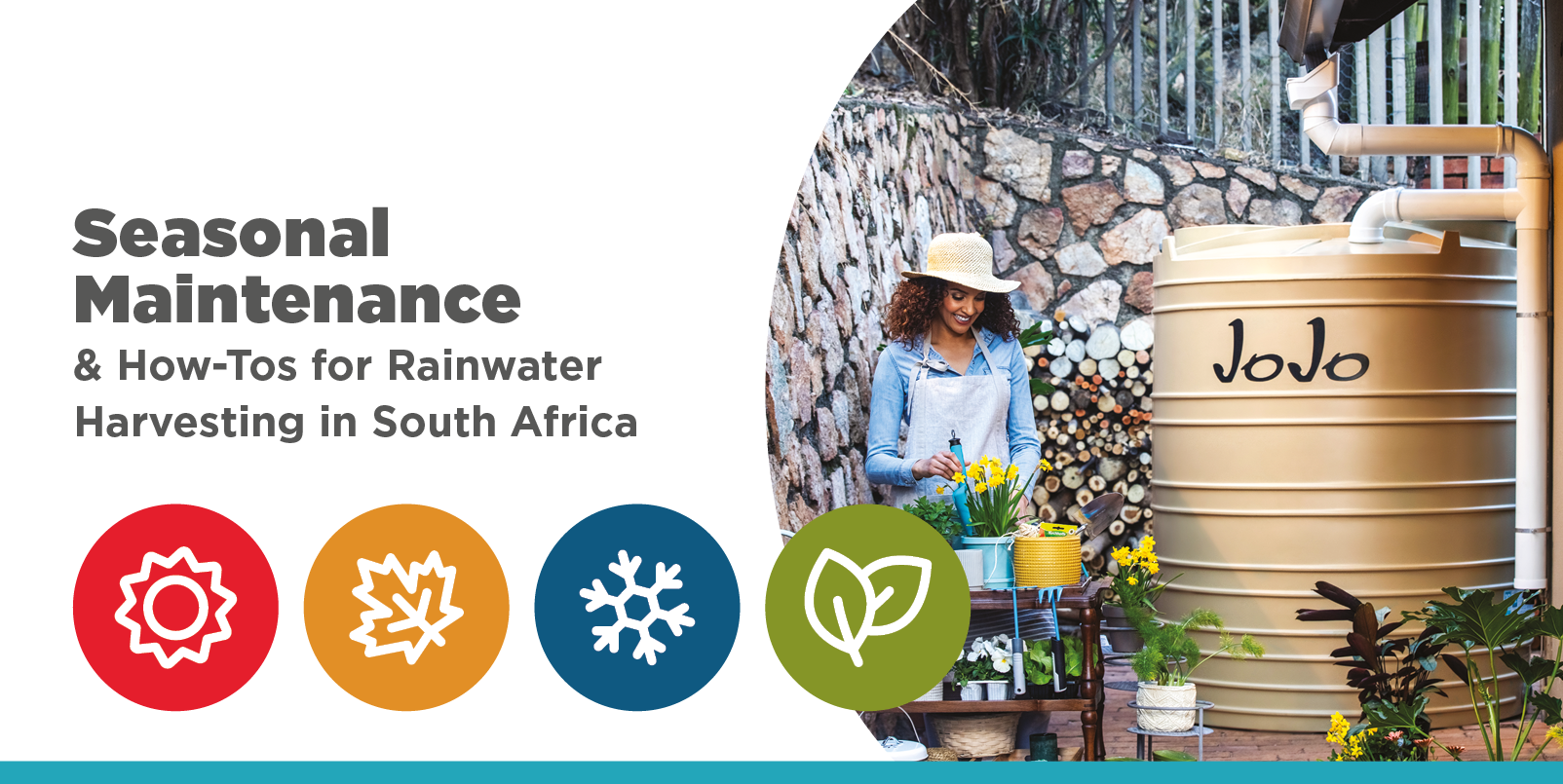
South Africa’s diverse climate means rainwater harvesting systems face different challenges throughout the year. For those in summer rainfall regions (including most of Gauteng, Mpumalanga, Limpopo, and KwaZulu-Natal) seasonal rainwater system care is key to keeping stored water clean, safe, and flowing efficiently.
Whether your setup serves a home, small business, or smallholding, regular rainwater tank maintenance in South Africa protects your investment and ensures your system performs at its best when you need it most.
Explore JoJo’s full range of Rainwater Harvesting Solutions for ideas on improving your collection and storage setup.
Why Seasonal Rainwater System Care Matters
A rainwater harvesting system is only as good as its upkeep. Over time, dust, leaves, and biological growth can affect both water quality and flow. Seasonal changes bring their own risks: early-summer storms can overwhelm gutters.
Neglecting maintenance can lead to system inefficiencies. Think of this as your rainwater tank maintenance checklist for South Africa: a seasonal guide to cleaner, safer water all year round.
For deeper guidance, check out: How to Properly Treat and Maintain Your JoJo Rainwater Tank
Spring Maintenance – How to Clean Rainwater Tanks Before the Rains
Spring is preparation season. As the first rains approach, take the time to clean and inspect every part of your rainwater harvesting system.
How do I clean my rainwater tank in summer?
It’s best to do a full clean just before the rainy season starts. Drain any remaining water, scrub the inside walls with a mild, non-toxic detergent, and rinse thoroughly. Check your first-flush diverter, gutters, and filter screens for blockages or debris.
This is also the ideal time to ensure you prevent algae in JoJo tanks by checking that your tank lid and connections are secure and intact to limit light exposure (as algae thrive in sunlight).
Don’t forget the details: mosquito mesh, filter screens, and rainheads all contribute to a cleaner system. JoJo’s DIY Installation Brochures & Leaflets include simple diagrams to help identify components that may need servicing or replacement.
Summer Maintenance – JoJo Tanks Stop Algae and How To Reduce Bad Smells
During the warmer months, higher temperatures and increased sunlight can contribute to algae growth and unpleasant odours in stored water. JoJo tanks are manufactured with a black inner lining that stops algae growth by blocking light penetration. To ensure this remains effective, it is important that the tank lid is securely fitted at all times, preventing sunlight from entering the tank. Regular inspections and basic seasonal maintenance further help maintain water quality throughout summer.
What causes a bad smell in rainwater tanks?
Usually, it’s due to decaying organic matter (leaves, insects, or biofilm) that’s built up in the tank or pipes. A light, earthy smell is common, but a strong or “rotten” odour signals a need for cleaning or water testing.
To reduce these issues:
- Remove any debris from your tank’s filter screens. If debris is left to sit, it will eventually break down and leach into your tank water—much like a tea bag releasing sediment over time.
- Check your first-flush diverter after every major rainfall and ensure that the collected dirty water is fully drained before the next rain event.
- You can also add a chlorine tablet (ensure the dosage is appropriate for your tank’s storage capacity). This helps maintain water quality and reduces bacterial growth.
For best results, pair your tank with our purpose-made screens, diverters, filters, and other JoJo Accessories.
How often should I test rainwater for safety?
At least quarterly, or more frequently if your water is used indoors. Rainwater can be safely used for domestic supply when adequate filtration is installed after the tank and before the water enters the home. A 2-Stage JoJo Whole-House Filter, with a Sediment Filter as the first stage and a Disruptor Filter as the second, is ideal for treating rainwater and can filter it to drinking-water standards. Find yours here.
Autumn Maintenance – Check Sediment, Valves, and Backup Systems
As rainfall starts tapering off in late summer and early autumn, your focus should shift to preserving what you’ve collected. This is a great time to perform a deep inspection and prepare for reduced inflow.
- Inspect the tank for sediment buildup at the base — if you notice murky water or slower flow, flush the system.
- Ensure all fittings, connectors, and valves are secure, especially around pump inlets and outlets.
- Inspect taps and irrigation outlets for leaks or wear.
These small steps keep your storage setup efficient and prevent unnecessary water loss as rainfall declines.
Winter Maintenance – Protect Against Cold and Degradation
Even in milder South African winters, cold snaps can cause problems for exposed pipework and fittings. In high-altitude or inland areas where temperatures can drop below freezing:
- Insulate exposed pipes and fittings using foam sleeves or lagging.
- Drain unused lines or irrigation hoses that won’t be used until spring.
This seasonal check helps extend the lifespan of your tank and components, protecting your rainwater harvesting investment through the cooler months.
Maintenance Alerts – Common Signs of Trouble
Rainwater systems are generally low-maintenance, but it’s important to stay alert for early warning signs:
- Unusual smells – may indicate stagnant water or decomposing organic matter.
- Discoloured water – could mean sediment buildup.
- Slow flow or blockages – often caused by debris or clogged filters.
- Visible algae or insect activity – shows sunlight exposure or poor sealing.
- A clear rainwater tank maintenance checklist for South Africa includes a monthly visual check and quarterly system clean.
If you spot recurring issues, check out our replacement parts and Rainwater Harvesting Accessories.
Keep Your Rainwater System Ready Year-Round
Rainwater systems perform best when maintained seasonally. By following this simple routine: clean in spring, monitor in summer, inspect in autumn, and protect in winter – you’ll enjoy reliable, clean water and a longer-lasting system.
A little effort now saves on costly repairs later and ensures your water stays safe, clear, and ready for every season.
Ready to upgrade or replace parts?
Explore our Rainwater Harvesting Solutions, or get in touch for expert advice!